Do Games That Reduce Stress Really Work? An Honest Look
In this article
Can games that reduce stress actually help you feel calmer, or is that just a nice idea? The honest answer is that a gentle, low-pressure game can be a pleasant way to take your mind off a hard day, and many people find a few quiet minutes genuinely soothing. A game isn't a cure, but the right one can be a small, healthy part of how you unwind. Here's a balanced look at what helps and what to avoid.
Can a game really help you relax?
It depends entirely on the game and how you play it. A calm, absorbing puzzle can gently pull your attention away from whatever's spinning in your head, giving your mind a short rest. That shift of focus is a big part of why many people reach for a cozy game after a stressful day.
But it's worth being honest. Some games do the opposite. Fast, loud, competitive games with countdowns and leaderboards can leave you more wound up than when you started. So the question isn't really "do games reduce stress?" but "which games, played how?"
We're not going to quote studies or promise results. Everyone's different, and what relaxes one person might frustrate another. The goal here is simply to help you choose well and pay attention to how you feel.
What makes a game calming rather than stressful
If you want a game to help you unwind, look for these qualities.
No time pressure
A ticking clock turns play into a scramble. Games without timers let you think at your own pace, which keeps your shoulders down instead of creeping toward your ears.
Clear, achievable goals
Knowing exactly what to do, and reaching small wins often, gives a quiet sense of progress. That steady trickle of little accomplishments is soothing in a day that may have felt out of your control.
Gentle visuals and sounds
Soft colors, friendly characters and pleasant sound effects set a calm mood. Cute, non-violent themes are far more relaxing than tense, high-stakes action.
Low stakes
A game you can leave at any moment, with nothing lost, respects your peace. No lives to protect, no streak to guard, no pressure to keep playing.
Our guide to mindful gaming without guilt goes deeper into playing in a way that leaves you refreshed rather than drained.
What to avoid if you're playing to de-stress
Some common features quietly work against relaxation.
- Countdowns and timers that rush your every move.
- Competitive leaderboards that turn a quiet pastime into a contest.
- Endless "one more" loops designed to keep you playing past the point of enjoyment.
- Loud, jarring effects that keep your body on alert.
- Punishing difficulty that leaves you frustrated instead of soothed.
If a game makes your jaw tighten or your heart race, it isn't the one for winding down, however fun it might be in other moods.
How to play games in a way that actually helps
The game matters, but so does how you use it.
- Keep sessions short. Five to ten minutes is often enough to reset. A marathon can leave you tired and stiff.
- Play with intention. Choose a calm game on purpose, rather than reaching for whatever's loudest.
- Notice how you feel. The simple test is whether you feel lighter afterwards. If you do, it's working. If not, try something gentler.
- Pair it with the body. Stretch your shoulders, take a few slow breaths, or stand up before and after you play.
- Stop when you feel calmer. The point is the calm, not the score. When you notice it, put the phone down and enjoy it.
If you're feeling especially anxious, our piece on calming games to play when you feel overwhelmed offers gentler, more specific ideas.
Hamster Jam: a cozy puzzle many people find calming
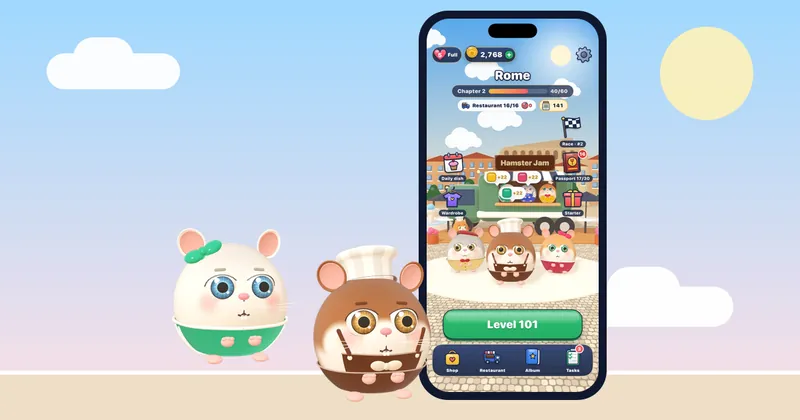
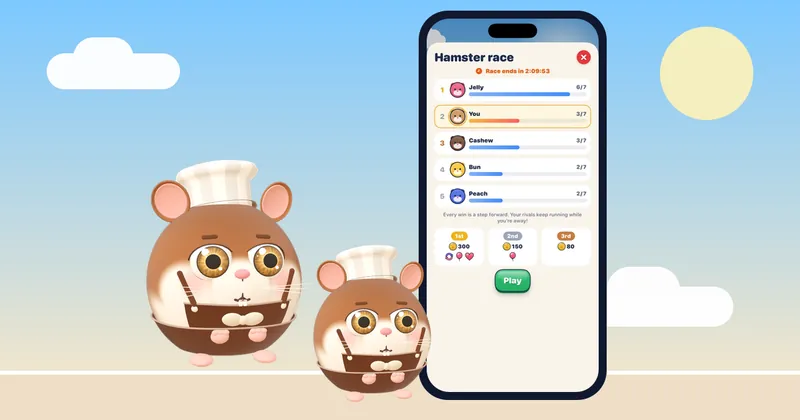
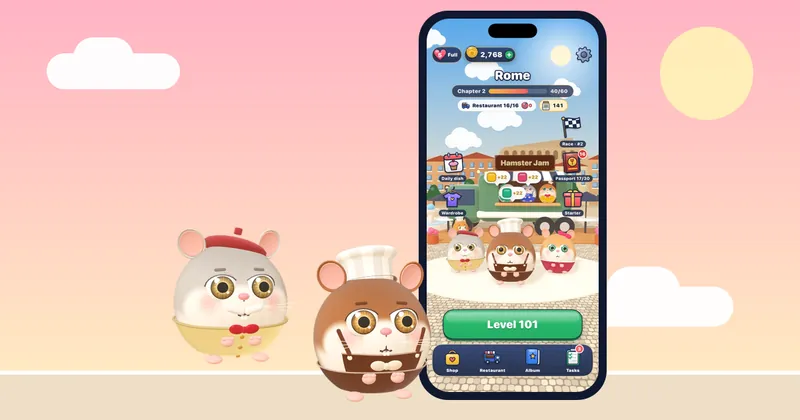
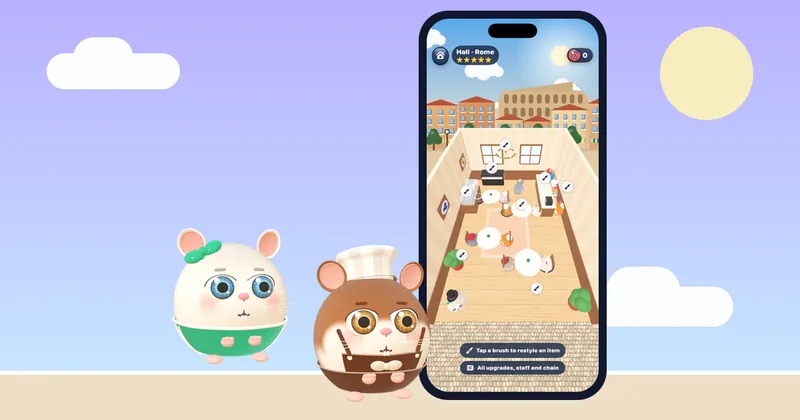
If you'd like to try a low-pressure game, Hamster Jam: Food Sort Puzzle is a cozy food sort puzzle for iPhone that ticks the calming boxes. It's free to play, works offline, and stars a gang of six hungry hamsters with a favourite dish each.
The idea is simple: the hamster gang is hungry and the street is jammed, so you tap a hamster whose path is clear and it hops to its dish, just keeping the waiting bench from filling up. There are no timers on your fun, every one of the hundreds of hand-checked levels is solvable, and friendly helpers like a free shuffle are there when you're stuck. The visuals are gentle and non-violent, with characters like calm Minty and unhurried Vanilla.
You can play a free mini level right in your browser to see whether its slow, tidy rhythm suits you.
A gentle, honest note
Games can be a lovely small comfort, but they aren't a substitute for rest, connection or care. If you find that stress, anxiety or sleep problems persist, it's worth talking to a doctor or a mental health professional. A cozy puzzle can sit alongside the things that really help, like movement, sleep, time with people you love, and support when you need it, not in place of them.
Curious whether puzzle games do anything for your mind more broadly? Our soft, no-hype look at whether brain games actually help is a good next read.
So, do games reduce stress? The right one, played in short, gentle sessions, can be a genuinely pleasant way to take a breather. Choose something calm, keep it brief, pay attention to how you feel, and let a few quiet minutes do their small, kind work.
Questions
Do games really reduce stress?
A calm, low-pressure game can be a pleasant way to take your mind off a hard day, and many people find it soothing. It isn't a cure, and some fast or competitive games do the opposite, so choose a gentle one and notice whether you feel lighter afterwards.
What kind of games are best for de-stressing?
Look for games with no timers, clear and achievable goals, gentle visuals and low stakes you can walk away from at any time. Cozy sorting and matching puzzles tend to fit this well, while loud, competitive or punishing games usually don't.
How long should I play to relax?
Short sessions of five to ten minutes are usually enough to reset. Playing with intention, pairing it with a few slow breaths or a stretch, and stopping once you feel calmer tends to help more than a long marathon.
When should I talk to someone instead of just playing a game?
Games are a small comfort, not a treatment. If stress, anxiety or sleep problems persist, it's worth discussing them with a doctor or a mental health professional, and keeping a cozy game as one gentle part of a wider routine of rest, movement and support.