Mindful Gaming: How to Play Games to Relax Without the Guilt
In this article
Mindful gaming means playing with a little intention, choosing a calm game on purpose, for a set stretch of time, as a real break, rather than scrolling into a game to numb out and losing an evening you didn't mean to give. Done this way, a few minutes of play can genuinely relax you, and the guilt that often follows mindless play simply disappears. Here's how to make your gaming mindful.
Why gaming sometimes leaves us feeling worse
Games are built to be engaging, and that's not a bad thing. The uneasy feeling afterward usually comes not from playing, but from playing without noticing: picking up the phone out of habit, staying longer than planned, and finishing more frazzled than when you started.
The fix isn't to quit. It's to add a small amount of awareness, the same gentle attention you'd bring to a cup of tea or a short walk. That's all "mindful" really means here.
The core idea: play on purpose
Mindful gaming rests on one simple shift, play with intention instead of on autopilot. Before you tap the icon, you answer two quiet questions:
- Why am I playing right now? To unwind, to take a short break, to enjoy something cozy. A real reason, not just reflex.
- How long do I want this to last? A level or two, five or ten minutes, until the kettle boils.
That's it. You don't need rules or apps. Just naming the reason and the rough length turns a vague habit into a deliberate, restful choice.
Simple habits for guilt-free play
A handful of gentle habits keep gaming on the relaxing side.
Choose calm games for calm goals
If you want to unwind, pick a game built to unwind you, cozy, untimed, low-stakes, rather than something tense that leaves your heart racing. Our guide to relaxing puzzle games and why they ease the mind explains what to look for.
Set a soft time box
Decide roughly how long before you start. "Just until this tea cools" or "two levels" works beautifully. A soft limit respects your time without turning fun into a strict schedule.
Make it a single, focused thing
Try playing just the game, not with a show on and a chat open at the same time. Giving one gentle activity your full attention is itself a small mindfulness practice, and it feels far more restful.
Notice how you feel
Halfway through and when you finish, check in: looser or tenser? Calmer or wound up? This tiny habit teaches you which games and session lengths actually leave you better, so you naturally drift toward the ones that help.
End on a good note
Stop when you feel reset, ideally after a small win, rather than after a frustrating streak. Finishing on a pleasant beat leaves you glad you played.
Mindful gaming as a mini-break
One of the loveliest uses of mindful gaming is as a deliberate pause in a busy day, a proper breather instead of doom-scrolling. A cozy puzzle fits this perfectly: short, self-contained and gentle. For more ways to build small resets into your day, our guide on how to relax after a long day is full of quick ideas that pair nicely with a calm game.
And if you're curious whether this kind of play does anything beyond feeling nice, our honest look at whether puzzle and brain games really help your mind covers what gentle play can and can't do, without hype or invented studies.
A cozy puzzle made for mindful play
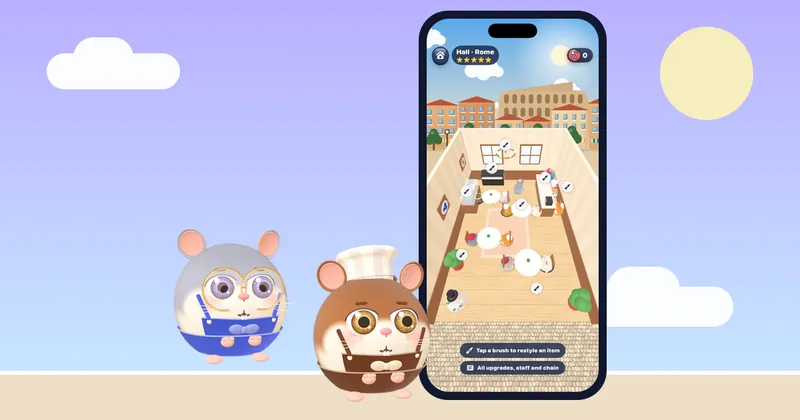
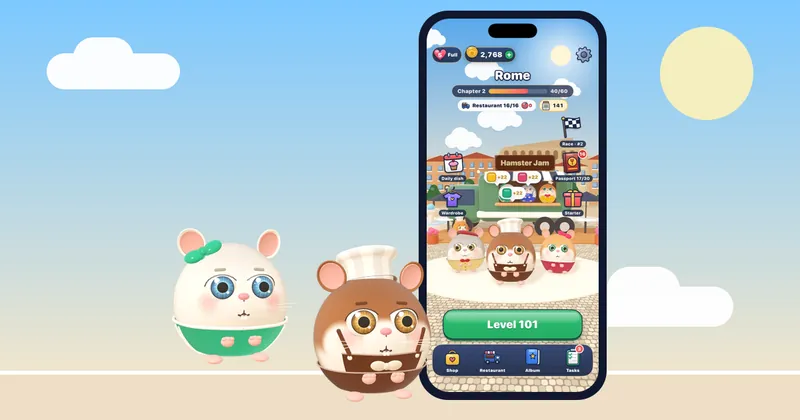
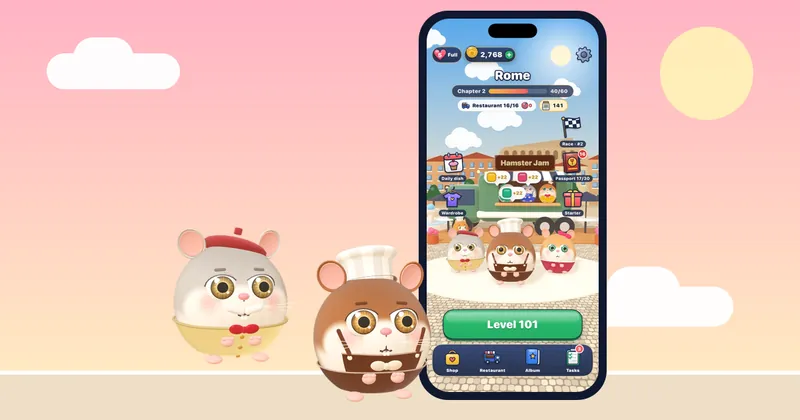
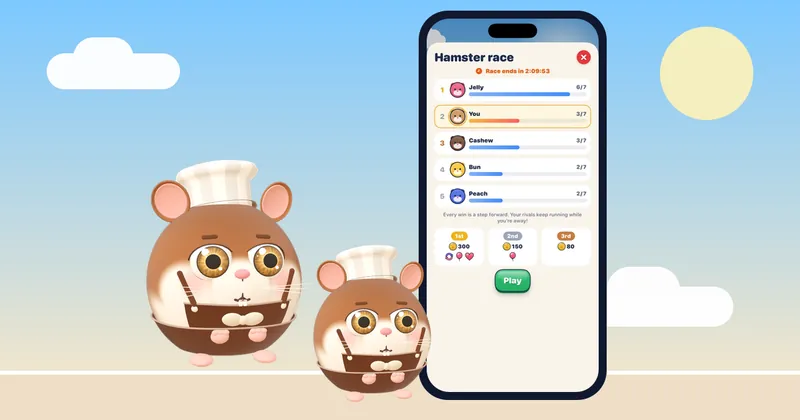
Some games are easier to play mindfully than others, and the untimed, low-stakes ones make it almost effortless. Hamster Jam: Food Sort Puzzle is a good example. It's free to play and works offline, and nothing about it pressures you to keep going.
How it plays:
- A gang of six hungry hamsters is stuck in a jammed street.
- You tap a hamster whose path is clear, and it hops to its favourite dish.
- You keep the waiting bench from filling up as the jam clears.
Why it suits mindful gaming:
- No timers on your fun, so you set your own pace and your own stopping point.
- Every level is solvable (hundreds of hand-checked puzzles), so you can stop after a satisfying win rather than a frustrating loss.
- Easy start, trickier later, with gentle twists like sleepy hamsters, ice blocks, keys and cages, lovebirds and picky VIPs, that engage without overwhelming.
- A relaxed free play mode you can dip into for exactly as long as you intended, then set down.
You can play a free mini level of the hamster puzzle in your browser as a quick, no-commitment first try.
When play isn't enough
Mindful gaming is a lovely small tool for unwinding, but it isn't a cure-all. If you're dealing with persistent stress, anxiety or trouble sleeping, those are worth talking through with a doctor or a mental-health professional. A cozy puzzle can be part of a calmer evening; it isn't a substitute for proper support when you need it.
It also helps to keep perspective: if gaming ever starts to crowd out sleep, meals or people you care about, that's a sign to pull back and rebalance, not a reason to feel ashamed.
In short
Mindful gaming is simply playing on purpose, knowing why you're playing and roughly how long, choosing calm games for calm goals, and noticing how you feel. That small amount of intention is what turns play from a guilty time sink into a genuine, guilt-free break. Pick a gentle, untimed game, give it your full attention for a few minutes, and stop when you feel reset. A hungry hamster jam, patiently waiting with no clock in sight, makes the practice easy and cheerful.
Questions
What is mindful gaming?
Mindful gaming means playing games with a little intention rather than on autopilot. Before you start, you name why you're playing (to unwind, to take a break) and roughly how long you want it to last. That small awareness turns a vague habit into a deliberate, restful choice, which is what removes the guilt that often follows mindless play.
How can I play games without feeling guilty?
Choose calm games that match your goal, set a soft time limit before you start, give the game your full attention instead of half-watching something else, and check in on how you feel as you play. End on a good note, ideally after a small win. Playing on purpose, rather than to numb out, is what leaves you feeling refreshed instead of guilty.
Are relaxing games actually good for you?
Many people find that a short, calm game helps them unwind and take their mind off a busy day, much like a brief walk or a cup of tea. The benefits come when play is gentle, intentional and kept in balance with sleep, meals and the people around you. It's a nice small tool for relaxing, not a replacement for rest or support when stress runs deep.
Is Hamster Jam good for mindful gaming?
Yes. Hamster Jam is a cozy food sort puzzle with no timers, so you set your own pace and your own stopping point, which makes it easy to play mindfully. Every level is solvable, letting you finish on a satisfying win, and its relaxed free play mode lets you dip in for exactly as long as you intended. It's free to play and works offline.