Do Brain Games Actually Help Your Mind? A Gentle Look
In this article
Do brain games actually help your mind? The honest answer is gentle: puzzle games can be a pleasant, engaging way to spend your attention, and many people find them focusing and relaxing, but it's wise to keep expectations modest and treat them as enjoyment first. Here's a down-to-earth look at what puzzle and brain games can offer, what they can't promise, and how to enjoy them in a calm, healthy way.
What people usually mean by "brain games"
"Brain games" is a loose label for puzzles that ask you to think, spot patterns, plan ahead or hold a few things in mind at once. It covers a lot of ground:
- Logic and number puzzles, like sudoku-style games.
- Word games, from crosswords to anagrams.
- Sorting and tidying puzzles, where you plan moves to bring order.
- Pattern and memory challenges, matching, sequencing and recall.
They all share one thing: they give your mind a small, structured problem to chew on, rather than passive scrolling.
What brain games can genuinely offer
Without overclaiming, there are real, everyday upsides to a good puzzle session.
A focused, absorbing break
A puzzle gives your attention one clear thing to do. Many people find that focus pleasantly crowds out a busy, noisy mind, which is a big part of why puzzles feel relaxing. It's engaged downtime rather than zoned-out scrolling.
A gentle sense of challenge and reward
Working out a tricky level and reaching the solution feels good. That small, earned win is satisfying, and chasing it keeps you lightly, pleasantly engaged, no pressure, just a nice little hit of accomplishment.
A calmer, more mindful few minutes
Because a good puzzle asks for thought but not panic, it can nudge you into a focused, present state, a bit like a mini mindfulness break. Our guide to mindful gaming and playing to relax without guilt explores this idea further.
A pleasant habit instead of a draining one
Swapping ten minutes of doomscrolling for a gentle puzzle is a small, friendly upgrade. It's active, it has a clear end point, and it tends to leave you feeling a little more settled rather than more frazzled.
What brain games can't promise
It's just as important to be honest about the limits. Puzzle games are entertainment, not medicine.
- They aren't a proven way to make you smarter overall, getting good at a puzzle mostly makes you good at that puzzle.
- They can't replace sleep, movement, real rest or connection with people, which matter far more to how your mind feels.
- They aren't a treatment for stress, anxiety or any condition. If those are weighing on you, it's worth talking to a doctor or professional.
Enjoy brain games for what they are, a pleasant, engaging pastime, and you'll get the best of them without the hype.
A calm brain game to try
If you'd like a puzzle that's engaging but gentle, a cozy sorting game is a lovely choice.
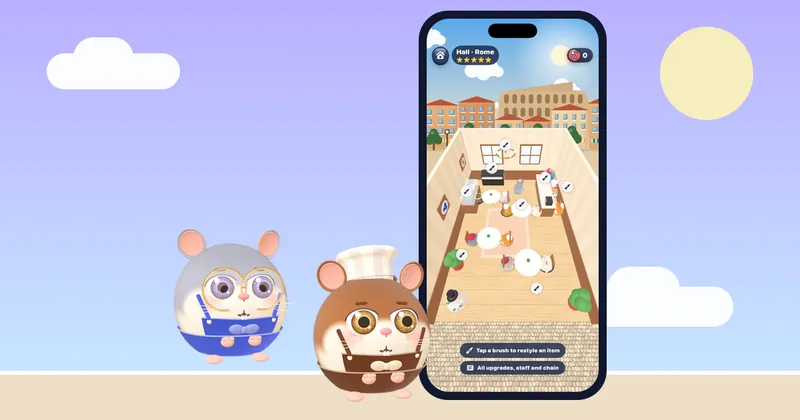
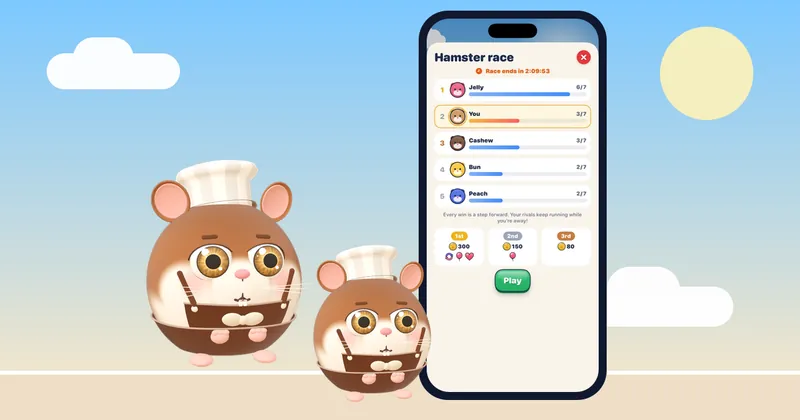
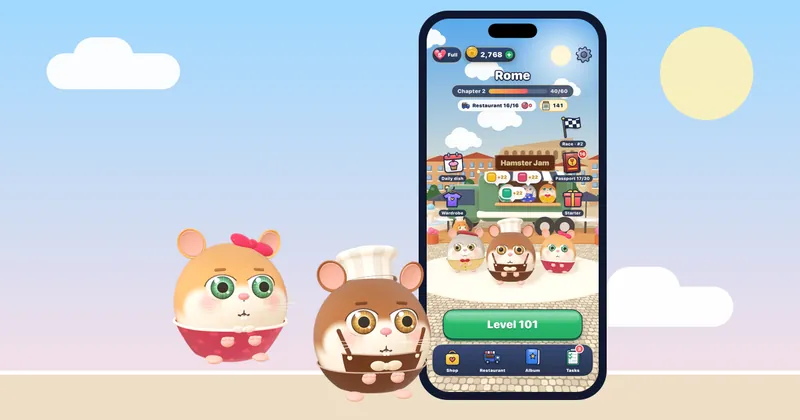
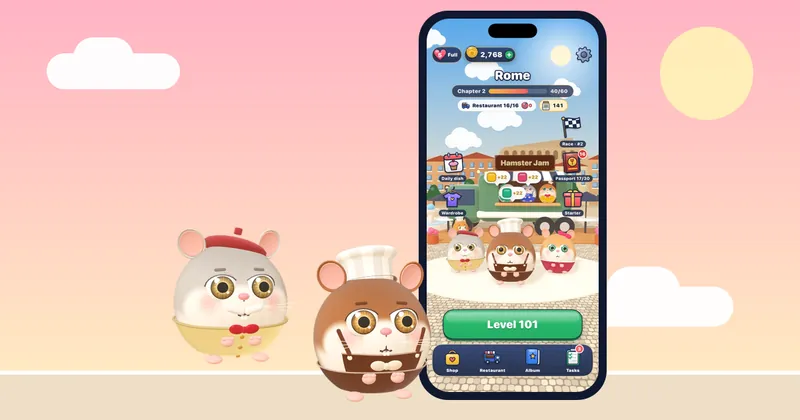
Hamster Jam is a free food sort puzzle for iPhone that gives your mind a light, pleasant workout. The hamster gang is hungry and the street is jammed; you tap a hamster whose path is clear and it hops off to its favourite dish, and you keep the waiting bench from overflowing, which means planning your moves a step ahead.
Why it's a nicely balanced brain game:
- A real thinking task: you plan which hamster to free first so the path stays clear, light problem-solving without the stress.
- No timers on your fun, so you think calmly rather than racing a clock.
- Easy start, trickier later, with twists like sleepy hamsters, ice blocks, keys and cages and picky VIPs to keep your brain gently engaged.
- Every level is solvable (hundreds of hand-checked levels), so the challenge always has a satisfying answer.
- Works offline with a relaxed free play mode, so it's an easy habit to build anywhere.
You can play a free level of the hamster puzzle in your browser to try the thinking for yourself. If you enjoy the planning, our look at why sorting games are so satisfying explains the appeal, and our deeper dive into relaxing puzzle games and why they calm your brain covers the wider family.
How to enjoy brain games healthily
To get the good parts without overdoing it:
- Play for fun first. Enjoyment is the point; any focus or calm is a bonus.
- Keep sessions short. Ten relaxed minutes beats a marathon.
- Choose no-timer puzzles, so the experience stays calming, not stressful.
- Don't chase "training" claims. Pick games you simply like playing.
- Balance screen time with rest, movement and time with people.
In short
Brain games can offer a focused, absorbing break, a gentle sense of challenge and reward, and a calmer few minutes than mindless scrolling, and many people genuinely enjoy that. What they can't do is make sweeping promises about your intelligence or replace sleep, rest and real support. Enjoy them as a pleasant pastime, keep sessions short and gentle, and a cozy sorting puzzle is a perfect, low-pressure way in.
Questions
Do brain games actually make you smarter?
The honest answer is that there's no strong case for it: getting good at a puzzle mostly makes you better at that puzzle, rather than boosting your overall intelligence. That said, brain games can give your mind a focused, absorbing break and a pleasant sense of challenge, which many people enjoy. Treat them as entertainment first and any extra benefit as a nice bonus.
Are puzzle games good for your mind?
They can be a pleasant, engaged way to spend your attention, and many people find a good puzzle focusing and relaxing, a friendlier habit than passive scrolling. But they're entertainment, not medicine: they can't replace sleep, movement, rest or connection with people, which matter far more. If stress or anxiety is weighing on you, it's worth talking to a doctor or professional.
What's a good, calm brain game to try?
A cozy sorting puzzle is a great balance of thinking and calm. Hamster Jam, for example, asks you to plan which hamster to free first so the path stays clear, light problem-solving with no timers rushing you. Every level is solvable, it starts easy and adds gentle twists, and it works offline. Sudoku-style logic games and crosswords are other calm, satisfying options.
How much should I play brain games?
There's no fixed rule, but short, gentle sessions work best, around ten relaxed minutes rather than a marathon. Play for enjoyment first, choose puzzles with no timers so the experience stays calming, and balance your screen time with rest, movement and time with people. Enjoyed that way, brain games are a pleasant, low-pressure pastime rather than a chore or an obsession.