Deep Breathing Exercises to Relax: Box Breathing, 4-7-8 and More
In this article
The quickest way to use your breath to relax is to slow it down and make your exhale longer than your inhale. That one change tells your body the pressure is off. Below you'll find the most useful deep breathing exercises, with simple step-by-step how-tos, so you can pick one and try it in the next minute, wherever you are.
Why deep breathing exercises help you relax
When you feel tense, your breathing often becomes quick and shallow without your noticing. Shifting to slow, full breaths is one of the few relaxation tools you can control directly, and many people find it helps them feel calmer within a couple of minutes.
The beauty of breathing is that it needs nothing: no app, no equipment, no quiet room. You can do it at your desk, in the car, in a waiting room or in bed. Because it's so portable, it's one of the easiest habits to build into a busy day.
A quick note before you start: breathe gently, never force it, and if any exercise makes you dizzy or uncomfortable, return to your normal breathing. These are meant to feel soothing, not like hard work.
Box breathing (the 4-4-4-4 method)
Box breathing is a favourite because the even, square rhythm is easy to remember and easy to follow. It's a great all-rounder for feeling grounded.
- Breathe in slowly through your nose for a count of 4.
- Hold your breath gently for a count of 4.
- Breathe out through your mouth for a count of 4.
- Hold again for a count of 4.
Repeat the square for two or three minutes. Picture drawing the four sides of a box as you go, one side per step. If the four-count holds feel long, start with a count of three and build up.
Box breathing is handy before something stressful, like a meeting or a difficult phone call, because it gives your mind a simple, steady focus.
The 4-7-8 breathing technique
The 4-7-8 method leans into a long, slow exhale, which many people find especially calming in the evening.
- Breathe in quietly through your nose for a count of 4.
- Hold your breath for a count of 7.
- Breathe out slowly and completely through your mouth for a count of 8, like a soft sigh.
Do this for four cycles to begin with. The exact counts matter less than keeping the exhale clearly longer than the inhale. If holding for seven feels like too much, shorten everything while keeping the same shape (for example 2-3-4) and work up over time. This one pairs beautifully with a bedtime wind-down.
Simple belly breathing
If counting isn't for you, belly breathing is as relaxed as it gets.
- Rest one hand on your chest and one on your stomach.
- Breathe in slowly so that the hand on your stomach rises, while the hand on your chest stays fairly still.
- Breathe out slowly and feel your stomach fall.
That's the whole exercise. Breathing "into your belly" encourages fuller, slower breaths and discourages the shallow chest-breathing that comes with stress. Try it for a few minutes whenever you notice your shoulders creeping up toward your ears.
Lengthened exhale breathing
This is the simplest option of all, and a good one when you're too frazzled to track counts.
- Breathe in normally.
- Breathe out for about twice as long as you breathed in.
That's it. A longer exhale is the common thread in most calming breath exercises, so even on its own it can help you downshift. Use it discreetly anywhere, since no one can tell you're doing it.
How to make breathing part of your day
A breathing exercise works best when it becomes a small habit rather than an emergency measure. A few ways to weave it in:
- Anchor it to something you already do. One minute of box breathing before your first coffee, or 4-7-8 as your head hits the pillow.
- Pair it with a cozy activity. Breathing helps your body slow down; a gentle, low-stakes activity helps your mind follow. For more on that combination, see our broader guide on how to relax after a long day.
- Keep sessions short. Two to five minutes is plenty. If you only have a moment, our tips on how to relax in five minutes show how much a tiny break can do.
Breathing plus a calm game
Sometimes your breath settles but your thoughts keep spinning. In those moments, giving your mind something gentle to hold can help the calm stick. A quiet, low-pressure puzzle can act like a soft landing after a breathing exercise.
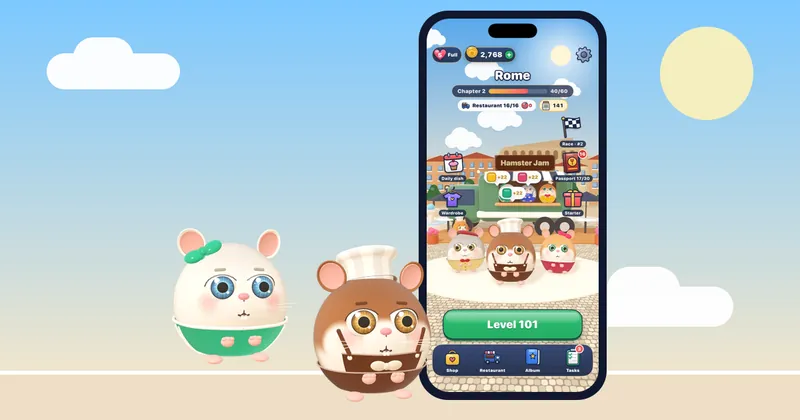
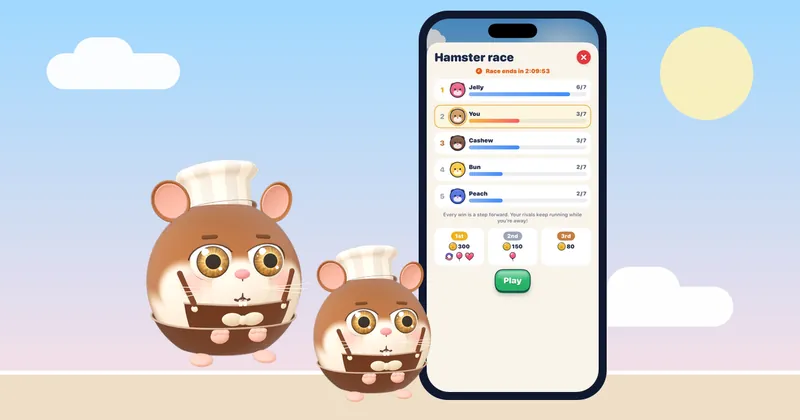
That's part of why so many people reach for Hamster Jam, a free food sort puzzle for iPhone. The hamster gang is hungry and the street is jammed, so you tap a hamster whose path is clear and it hops to its favourite dish, planning the order so the waiting bench doesn't fill up. There are no timers on your fun, every level is hand-checked and solvable, and it works offline, so it's an easy, unhurried thing to do after a few slow breaths. You can even try a free mini level right in your browser to see how calm it feels.
A 3-minute breathing reset
Put it all together in one short routine you can repeat any time:
- Minute 1: belly breathing, one hand on your stomach, settling in.
- Minute 2: box breathing, drawing the square, 4-4-4-4.
- Minute 3: a few rounds of 4-7-8, letting each exhale get longer and softer.
Finish by sitting quietly for a moment before you move on. If your mind is still racing after breathing, our guide to quick ways to calm anxiety has more grounding techniques to try.
When breathing isn't enough
Deep breathing exercises are everyday tools for everyday tension, and they're a lovely place to start. But if you've felt stressed, anxious or unable to sleep for weeks, or it's affecting your daily life, it's worth talking with a doctor or a mental health professional. Breathing can sit alongside that support, not replace it.
For everyday stress, keep it simple: choose one exercise, practise it when you're already fairly calm, and it'll be ready when you really need it.
Questions
Which deep breathing exercise is best for relaxing?
There's no single best one, but many people find 4-7-8 breathing especially calming because of its long exhale, while box breathing is great for feeling grounded before a stressful moment. Try both for a few days and keep the one that feels most natural to you.
How long should I do breathing exercises?
Two to five minutes is enough for most people to feel a shift. You can do a quick round whenever you notice tension and a slightly longer session at bedtime. Little and often tends to work better than one long session now and then.
Can breathing exercises help with sleep?
They can help many people wind down, especially slow techniques like 4-7-8 or a simple lengthened exhale. Do a few quiet rounds in bed with the lights low, and pair them with a calm routine. If sleep problems last for weeks, it's worth speaking to a professional.
Can I combine breathing with something else to relax?
Yes. Breathing calms the body, and pairing it with something gentle for the mind, like a slow walk, soft music or a cozy, low-pressure puzzle game, can help the calm last. Keep whatever you choose unhurried and easy.