How to Calm Anxiety Fast: Grounding Techniques to Feel Calmer Now
In this article
To calm anxiety fast, bring your attention out of your racing thoughts and back into the present moment: slow your breathing, name what's around you, and give your senses something simple to do. These grounding techniques won't erase every worry, but many people find they can take the edge off anxious feelings within a few minutes.
What's happening when anxiety spikes
When you feel anxious, your body shifts into alert mode. Your breathing speeds up, your heart races, and your mind jumps ahead to everything that could go wrong. It's an old survival response, and it's exhausting when it fires over everyday things like emails, traffic or a looming to-do list.
The goal of calming down fast isn't to argue with the worry. It's to send your body a clear "you're safe right now" message through your breath and your senses. Once the physical alarm eases, your thoughts usually follow.
Quick grounding techniques to calm anxiety fast
Try one at a time. If the first doesn't land, move to the next. With practice, they get quicker and more reliable.
The 5-4-3-2-1 senses check
This classic grounding exercise pulls you out of your head and into the room:
- 5 things you can see
- 4 things you can feel (your feet on the floor, the chair, your clothes)
- 3 things you can hear
- 2 things you can smell
- 1 thing you can taste
Go slowly and really notice each one. By the end, your attention has moved from the imagined future to the actual present.
Slow, longer exhales
Fast, shallow breathing fuels anxiety, so slowing it is one of the fastest resets.
- Box breathing: in for 4, hold for 4, out for 4, hold for 4.
- Longer exhale: breathe in through your nose, then let the out-breath last noticeably longer, say in for 4, out for 6. The long exhale is the part that soothes.
Keep it gentle. If holds feel uncomfortable, just lengthen the exhale and let everything else be easy.
Cool water and physical anchors
A splash of cool water on your face or wrists can interrupt a spike surprisingly well. So can holding something cold, pressing your feet firmly into the floor, or wrapping your hands around a warm mug. These small physical anchors remind your nervous system where you actually are.
Name it to tame it
Sometimes saying the feeling out loud, even quietly, helps: "I'm feeling anxious, and that's okay." Labeling the emotion creates a little distance from it, so it feels less like a flood and more like a wave you can ride out.
Give your mind a gentle, absorbing task
When anxious thoughts are spinning, a small task that needs just enough focus can break the loop. The trick is choosing something calm and achievable, not another source of pressure.
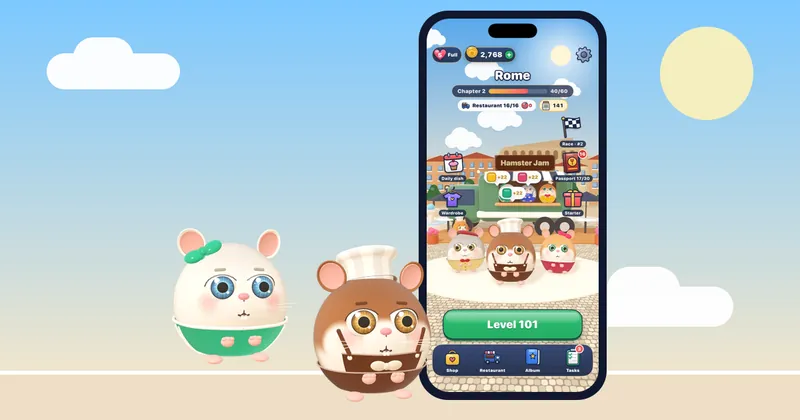
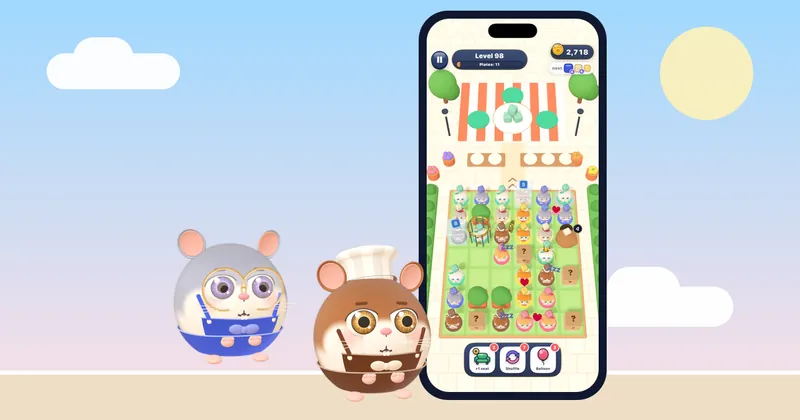
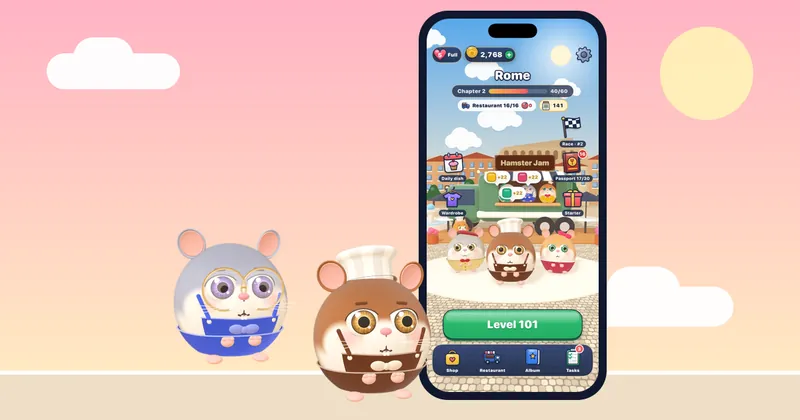
A cozy puzzle game can serve as this kind of gentle anchor. Hamster Jam is a free food sort puzzle for iPhone that's easy to pick up when you need to settle. The hamster gang is hungry and the street is jammed; you tap a hamster whose path is clear and it hops off to its favourite dish, and you simply plan the order so the waiting bench doesn't overflow.
It works as a calming distraction because:
- There are no timers on your fun, so nothing rushes you while you're already on edge.
- Every level is solvable (the hundreds of levels are hand-checked), so you get small, reliable wins rather than frustration.
- It's gentle and non-violent, with soft visuals and calm little heroes like Minty and Vanilla.
- It works offline, so you can reach for it anywhere, even with no signal.
Play a level or two until your breathing settles, then set it aside. If you'd like to feel how low-pressure it is, you can play a free level of the hamster puzzle in your browser.
A 3-minute calm-down you can use anywhere
When anxiety hits and you need something simple, run through this:
- One minute of breathing. Longer exhales, shoulders down, jaw soft.
- One minute of grounding. Run the 5-4-3-2-1 senses check, slowly.
- One minute of a gentle task. A single cozy puzzle level, tidying one small thing, or writing down exactly what's worrying you.
It's short enough to do at your desk, in the car before heading in, or in a quiet corner. The more you practice it on calm days, the faster it works on hard ones.
Small habits that make anxiety less frequent
Quick techniques handle the moment. A few everyday habits can turn down the background noise over time:
- Move your body most days, even a short walk, to burn off restless energy.
- Protect your sleep, since tiredness makes anxiety louder. Our guide to winding down before bed can help here.
- Go easy on stimulants, especially caffeine late in the day.
- Build in real rest, not just collapsing at night. For gentle ideas, see our broader guide to relaxing and unwinding after a long day.
- Keep a few quick resets ready, like the tiny breaks in our guide to relaxing in five minutes, so you're never caught without a tool.
When to reach out for support
Everyone feels anxious sometimes, and the techniques above are good everyday tools for those moments. But anxiety is also something you don't have to manage alone. If anxious feelings are frequent, intense, or getting in the way of your daily life, work or relationships, please talk to a doctor or a mental health professional. There are effective ways to feel better, and asking for help is a strong, caring choice.
For the everyday spikes, keep it simple. Breathe slowly, ground yourself in the present, and give your mind one small, gentle thing to hold onto. That's often all it takes to calm anxiety fast enough to carry on with your day.
Questions
What is the fastest way to calm anxiety?
Slowing your breathing is usually the quickest reset, especially making your exhale longer than your inhale. Pair it with a grounding exercise like the 5-4-3-2-1 senses check, which pulls your attention out of anxious thoughts and back into the present. Both can start working within a couple of minutes.
What are grounding techniques?
Grounding techniques are simple actions that anchor you in the present moment instead of in worried thoughts. Examples include the 5-4-3-2-1 senses check, pressing your feet into the floor, holding something cold, or focusing on your breathing. They give your senses something concrete to do, which helps the anxious feeling settle.
Can a game really help with anxiety?
A calm, low-pressure game can act as a gentle distraction that breaks a loop of anxious thoughts, as long as it doesn't add stress of its own. Hamster Jam is one example: a free food sort puzzle with no timers on your fun, hand-checked levels that are always solvable, and offline play, so it gives small wins without rushing you. Keep sessions short and stop once you feel steadier.
When should I see someone about anxiety?
Occasional anxiety is normal, but if anxious feelings are frequent, intense, or interfering with your daily life, sleep, work or relationships, it's worth talking to a doctor or a mental health professional. They can help you understand what's happening and find support that works. Reaching out early is a sensible and caring thing to do.