Screen Time Balance: How to Use Your Phone More Mindfully
In this article
Better screen time balance isn't about using your phone less for its own sake. It's about using it on purpose: choosing what you open, noticing how it makes you feel, and swapping the habits that drain you for ones that actually help. Small, judgment-free changes tend to stick far better than strict bans.
Why screen time feels out of balance
Phones are designed to be easy to pick up and hard to put down. Feeds refresh forever, notifications pull your attention, and "just a quick check" turns into twenty minutes you didn't plan. None of that means you lack willpower, it means the apps are doing exactly what they were built to do.
The useful question isn't "how do I use my phone less?" It's "how do I use it in a way that leaves me feeling good?" Some screen time is genuinely restful, connecting, or fun. Some leaves you foggy and a little worse than before. Balance is about tilting the scales toward the first kind.
How to use your phone more mindfully
You don't need to overhaul everything. Try a few of these and keep what helps.
Notice how each app makes you feel
For a few days, pay quiet attention after you close an app. Did you feel connected, relaxed or entertained, or restless, envious and tired? You'll likely spot a few apps that reliably lift you and a few that reliably drain you. That awareness alone starts to shift your choices.
Turn off the pull
Most of what interrupts you isn't urgent. Turn off non-essential notifications, especially badges and sounds from social and news apps. Keep alerts for the people and things that truly matter. A quieter phone is a phone you pick up on purpose rather than on reflex.
Set gentle boundaries, not harsh bans
Strict all-or-nothing rules usually backfire. Softer boundaries tend to last:
- Screen-free zones, like the dinner table or the first ten minutes after you wake up.
- A soft curfew for bright, stimulating apps in the hour before bed.
- Batching, checking messages or news at set times rather than all day.
Make the good stuff easier to reach
Mindful use isn't only about blocking things, it's about choosing better defaults. Move the apps that drain you off your home screen, and keep the ones that genuinely relax or help you within easy reach. Your phone can be a tool for calm, not just a source of noise.
Choose restful activities over bottomless ones
There's a big difference between an activity that ends and one that never does. Endless scrolling has no natural stopping point, so it quietly eats time and leaves you unsettled. A finite, chosen activity, a chapter of an ebook, a short workout video, a single puzzle level, gives you a clear start and stop, which feels much more restful.
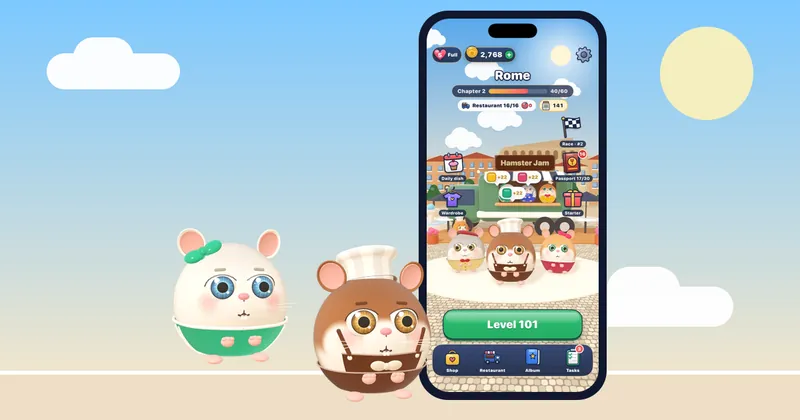
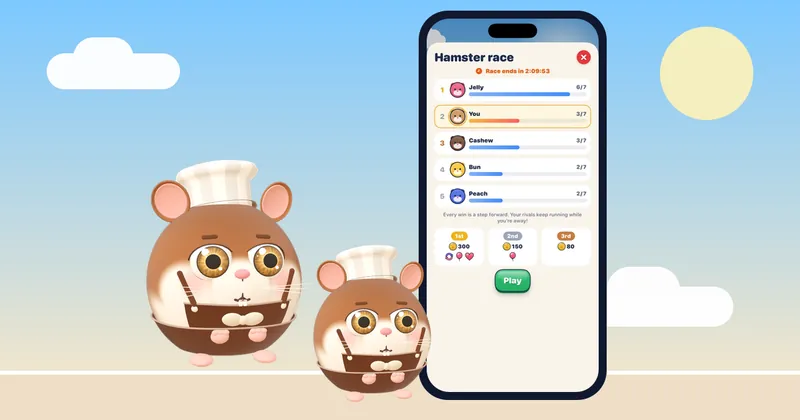
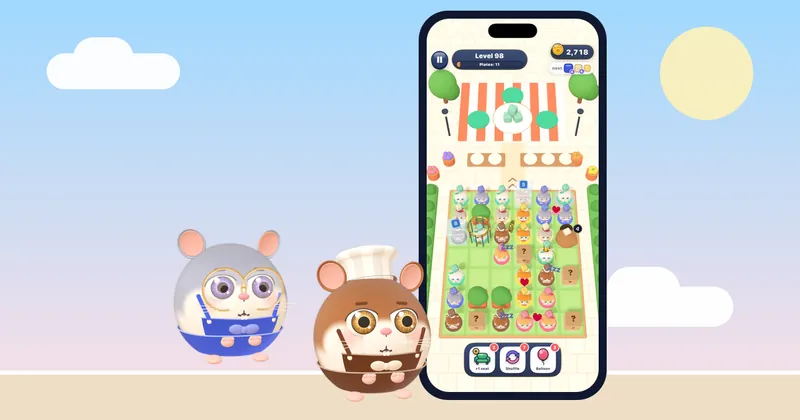
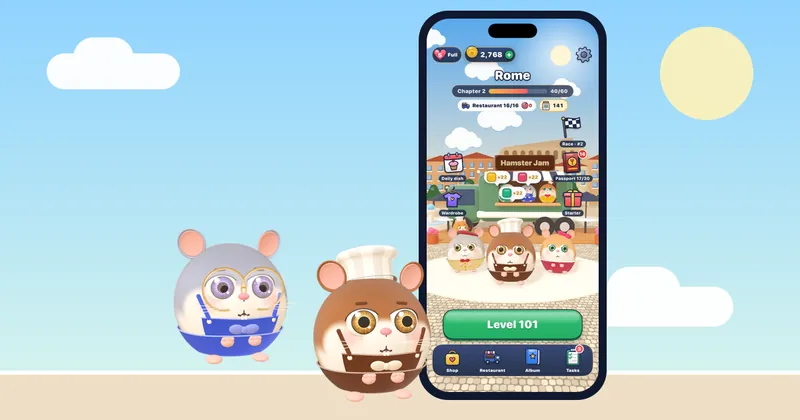
A cozy puzzle game is a nice example of finite, intentional screen time. Hamster Jam is a free food sort puzzle for iPhone built from self-contained levels: the hamster gang is hungry and the street is jammed, so you tap a hamster whose path is clear and it hops off to its favourite dish, keeping the waiting bench from filling up. You play a level, enjoy the small win, and stop, no infinite feed pulling you onward.
A few things make it a good fit for balanced screen time:
- No timers on your fun, so it never pressures you to keep going.
- Every level is solvable (the hundreds of levels are hand-checked), so a quick session ends on a satisfying note.
- It works offline, which pairs well with putting your phone in airplane mode to cut distractions.
- It's gentle and non-violent, an easy, low-key way to decompress.
Curious how a short, bounded session feels? You can play a free level of the hamster puzzle in your browser without installing anything.
Pair your phone with the real world
Some of the best screen-time habits involve looking up from the screen. Take calls while walking. Listen to music or a podcast while you stretch or tidy. Use your phone to plan time with friends rather than as a replacement for it. The phone becomes a bridge to good things instead of a substitute for them.
A simple weekly reset
Once a week, take five minutes to tune your setup:
- Scan your screen-time summary without judgment, just curiosity about where the hours went.
- Prune one thing that drains you, mute a chat, delete an app, or move it off the home screen.
- Add one good default, a relaxing app, an ebook, or a plan to call someone.
Small weekly adjustments beat one big crackdown you can't maintain.
Screens, sleep and winding down
Screen habits and sleep are closely linked. Bright, stimulating content late at night can keep your mind wired, so the hour before bed is a great place to apply gentler boundaries. Our guide to winding down before bed for better sleep has a simple evening routine, and if you're looking to decompress more broadly, our bigger list of ways to relax and unwind is a good companion. If you'd like to feel less guilty about the downtime you do spend gaming, our take on mindful gaming may help.
Be kind to yourself
Screen-time balance is a practice, not a pass-or-fail test. Some days you'll scroll more than you meant to, and that's fine. The point is to notice, adjust, and keep nudging your habits toward what leaves you feeling good. Over time, those small nudges add up to a phone that feels like a helpful tool again, which is what healthy screen time balance really means.
Questions
How much screen time is healthy?
There's no single magic number that fits everyone, because it depends on what you're doing and how it affects you. A more useful measure is how your screen time leaves you feeling: restful, connected and entertained is very different from drained and restless. Focus on tilting your hours toward the kind that leaves you feeling good.
How can I stop scrolling so much?
Start by turning off non-essential notifications and moving the apps that pull you in off your home screen, so you open them on purpose rather than by reflex. Swap bottomless feeds for finite activities with a clear end, like a single puzzle level or a chapter of a book. Gentle boundaries, like screen-free zones, usually last longer than strict bans.
Is all screen time bad?
No. Plenty of screen time is genuinely restful, useful or fun, like connecting with friends, learning something, or playing a calm game that you choose to stop. The habits that tend to leave people feeling worse are the endless, unplanned ones. Balance is about keeping the good and trimming the draining, not cutting everything.
Can games be part of balanced screen time?
Yes, especially calm, finite ones you play on purpose. A cozy puzzle with self-contained levels gives you a clear start and stop, unlike an endless feed. Hamster Jam is one example, with no timers on your fun, always-solvable levels and offline play, so a short session ends on a satisfying note rather than pulling you onward.