Why Puzzle Games Are So Addictive: The Pull of Just One More
In this article
"Just one more level." You've probably said it, then looked up to find half an hour gone. Puzzle games have a quiet, cozy pull that keeps you coming back. But why are puzzle games so addictive? The answer isn't anything sinister in the best ones. It's a handful of simple, satisfying ingredients that line up perfectly with how we like to feel: in control, making progress and happily absorbed. Here's what's really going on, and how to enjoy that pull without letting it run away with your evening.
The simple ingredients of "just one more"
A good puzzle game isn't magic. It's a neat stack of small, pleasant feelings, each one nudging you toward the next level.
A clear goal you understand instantly
From the moment a level starts, you know exactly what you're trying to do. There's no confusion to wade through. That clarity is comforting. Your mind latches onto a single, solvable task, and the rest of the world goes quiet for a while.
Small, frequent wins
Every correct move is a tiny "yes." Those little hits of progress stack up fast, and finishing a level is a clean, obvious win. In a day full of open-ended, never-quite-done tasks, a puzzle offers something rare: a thing you can actually complete, over and over.
The pull of nearly-solved
When you're one or two moves from finishing, stopping feels almost impossible. Your brain hates leaving a pattern incomplete, so it urges you to close the loop. The next level dangles the same promise, which is how "one more" becomes five more.
Flow: the in-the-zone feeling
When the challenge sits in the sweet spot, not too easy, not too hard, it's easy to slip into flow, that pleasant state where time seems to glide and your attention rests entirely on the board. Flow feels good, and a well-paced puzzle game keeps serving up levels right at the edge of your ability to keep you there. For more on this, see our deep dive into relaxing puzzle games and why sorting calms the brain.
A gentle sense of order
Many puzzles, especially sorting ones, turn a messy jumble into tidy order. Watching chaos resolve into neatness is quietly thrilling in a low-key way. It scratches the same itch as organizing a drawer or lining up books on a shelf.
Why sorting and tidying puzzles are especially moreish
Of all puzzle types, the sorting and organizing kind can be the hardest to put down, and for sweet reasons. Each move produces a small, visible improvement: something moves from the wrong place to the right place. You get constant, bite-sized feedback that you're making progress.
There's also the satisfaction of completion. A sorting board goes from fully mixed-up to perfectly ordered, and that journey from mess to done is deeply pleasant. Our piece on why sorting and organizing games are so satisfying explores this feeling in more detail, and our look at oddly satisfying mobile games covers the wider family of games built on that cozy payoff.
Addictive isn't the same as harmful
It's worth saying plainly: a game being hard to put down isn't automatically a bad thing. The pull of "just one more" is the same pleasant pull you feel finishing a crossword, a chapter of a good book or a jigsaw. The difference between a cozy habit and a problem is usually how a game is built, and how you choose to play it.
Watch out for designs that engineer the pull in grabby ways:
- Endless mechanics that never let you reach a natural stopping point.
- Timers and streaks that pressure you to keep playing out of worry rather than joy.
- Harsh penalties that make stopping feel like losing.
The cozy alternative is a game with clear, finishable levels, no timers and no guilt-trips. Those let you enjoy the satisfying pull and then put the phone down whenever you like.
A cozy puzzle you can stop whenever you want: Hamster Jam
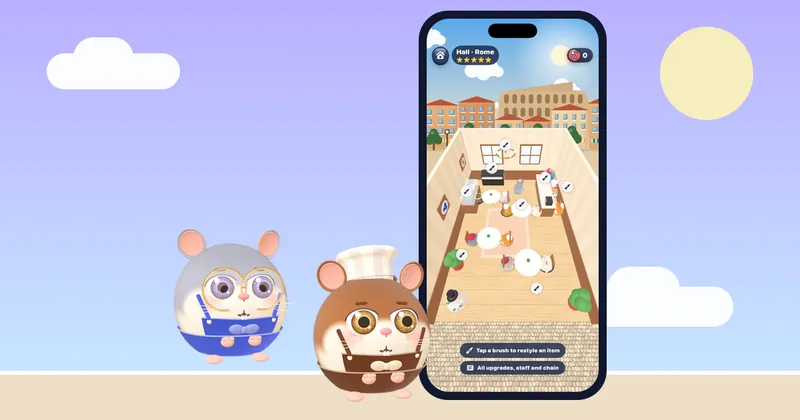
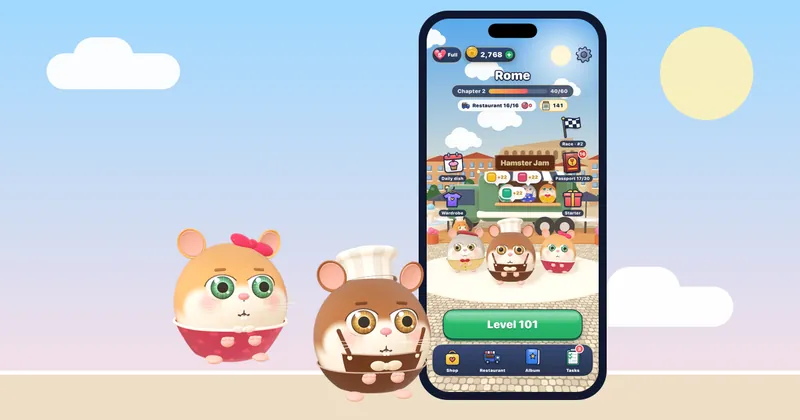
If you want to feel that pleasant "one more" pull in a gentle, pressure-free way, Hamster Jam: Food Sort Puzzle is a good example. It's a free-to-play iPhone puzzle built on exactly the satisfying ingredients above. The hamster gang is hungry and the street is jammed, so you tap a hamster whose path is clear and it hops to its favourite dish, while you keep the waiting bench from filling up.
It has the moreish qualities without the grabby ones:
- Clear goals and small wins. Every hamster that reaches its dish is a tiny, satisfying step toward a tidy board.
- That sense of order. A jammed street slowly resolves into a cleared one. Chaos becomes neatness.
- No timers on your fun. The pull comes from satisfaction, not pressure, so you can stop at any moment.
- Every level is solvable. Hundreds of hand-checked levels keep the challenge in the flow sweet spot, with a free shuffle to help you past a sticky board.
- Works offline and stays cozy, with cute characters and no harsh penalties.
Curious how the pull feels? You can play a free mini level in your browser and see if you catch yourself thinking "just one more."
How to enjoy the pull without losing the evening
The goal isn't to resist puzzle games. It's to let them be the lovely little habit they're best at. A few simple guardrails help.
- Set a soft limit before you start. "Two or three levels" gives the fun a frame.
- Use the level's end as a cue. Each finished board is a natural moment to decide whether to stop. Take one of those cues.
- Play finishable games. Choose puzzles with clear levels over endless ones, so there's always a clean place to pause.
- Keep it a break, not the whole night. A short session leaves you refreshed. A marathon can leave you a bit bleary.
- Notice how you feel. If you stop feeling relaxed and start feeling frazzled, that's the signal to put it down.
So why are puzzle games so addictive? Because they give your mind a clear goal, a steady stream of small wins and that gliding flow feeling, all wrapped in the quiet joy of turning mess into order. Choose a cozy one without timers or traps, and you can enjoy that pull on your own terms, one satisfying hamster jam at a time.
Questions
Why are puzzle games so addictive?
Good puzzle games stack several pleasant feelings: a clear goal you grasp instantly, small frequent wins, the hard-to-resist pull of a nearly-solved board, the gliding "flow" state when the challenge is just right, and the satisfaction of turning mess into order. Together these make "just one more level" very tempting.
Is it bad that I can't stop playing a puzzle game?
Not necessarily. The pull is the same cozy satisfaction you get from a crossword or a jigsaw. It becomes a problem mainly when a game is built with grabby, endless mechanics, timers or guilt-trips. Choosing games with clear, finishable levels and setting a soft limit lets you enjoy the pull on your terms.
What makes sorting puzzles especially hard to put down?
Sorting puzzles give constant, bite-sized feedback: each move visibly improves the board, moving something from the wrong place to the right place. Add the satisfaction of a board going from fully mixed-up to perfectly ordered, and the sense of progress and completion is very moreish.
How can I enjoy puzzle games without overdoing it?
Set a soft limit before you start, use each level's end as a natural cue to decide whether to stop, and favor finishable games over endless ones. Keep sessions short so you feel refreshed rather than bleary, and stop when you notice you're no longer relaxed.