Games for Focus Breaks: Pomodoro-Style Resets That Work
In this article
If you work in focused sprints, like the popular Pomodoro method of 25 minutes on and 5 minutes off, the break matters just as much as the work. The problem is that a "quick break" spent scrolling can swallow your whole pause and leave you more scattered. The fix is a short, finishable activity, and games for focus breaks are surprisingly good at it. Here's how to take a break that genuinely resets you, and which kinds of games fit a five-minute window.
Why your focus break needs a real stop
A break is supposed to recharge your attention so the next sprint is sharp. But not all breaks do that. Some just trade one draining task for another.
A good focus-break activity should:
- Pull your mind off the work completely, so your attention gets a true rest.
- Have a clear end, so you come back on time instead of drifting.
- Feel light, not like another chore or another open loop.
- Give a small sense of completion, which is quietly motivating for the next round.
An endless feed fails most of these: it never ends, it's passive, and it often leaves you more frazzled. A short puzzle with a clear finish does the opposite. For more on fitting tiny resets into a busy day, see our guide to relaxing in 5 minutes.
What makes a game right for a 5-minute break
The whole point is that the break ends when it's supposed to. That means the game has to have a natural stopping point built in.
- Short, self-contained levels. You want to finish something in the window, not get cut off mid-puzzle.
- Instant start. No long loading, tutorials or menus eating your five minutes.
- No timers or pressure. The break should calm you, not spike your stress.
- One-tap simplicity. Easy controls mean your tired brain can relax, not learn.
- A clear finish. When the level ends, that's your cue to get back to work.
In short, you're looking for the opposite of a time-sink: something that gives you a win and then lets you go. Our roundup of games with short, 5-minute sessions is a good place to find the type.
Genres that fit a focus break
Describe the feeling you want from the break and the right genre follows.
Cozy sorting puzzles
Sorting puzzles are ideal. A single board is short, the goal is instant to grasp, and tidying a jumble into order is a satisfying mental palate-cleanser between work tasks.
Quick matching games
Gentle, untimed matching games give you an easy rhythm to settle into for a few minutes, then a natural pause when the board clears.
Single-screen logic puzzles
A small logic or number puzzle gives your mind a different kind of workout from your actual work, which can feel refreshing, as long as it's not so hard you overrun your break.
Word puzzles
A quick word game is a nice contrast to visual or numerical work. One puzzle is usually a perfect break-sized bite.
A great focus-break puzzle: Hamster Jam
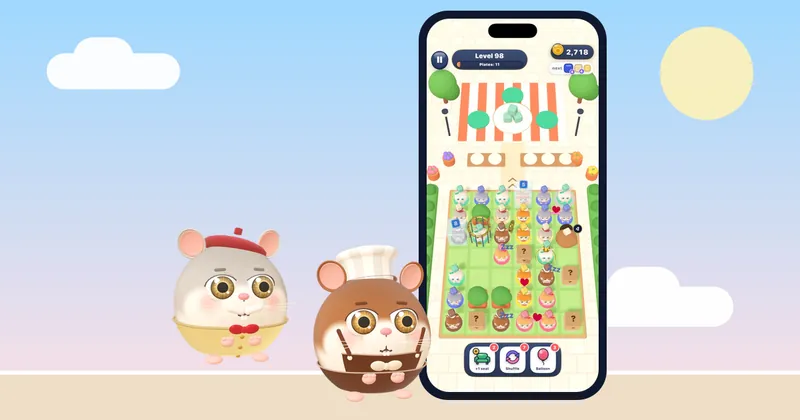
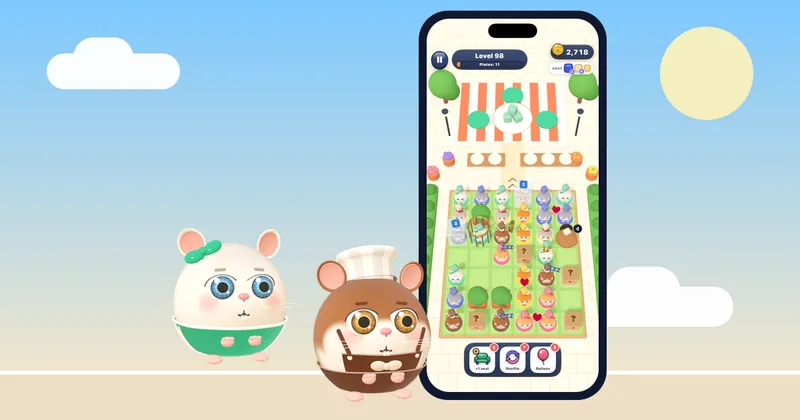
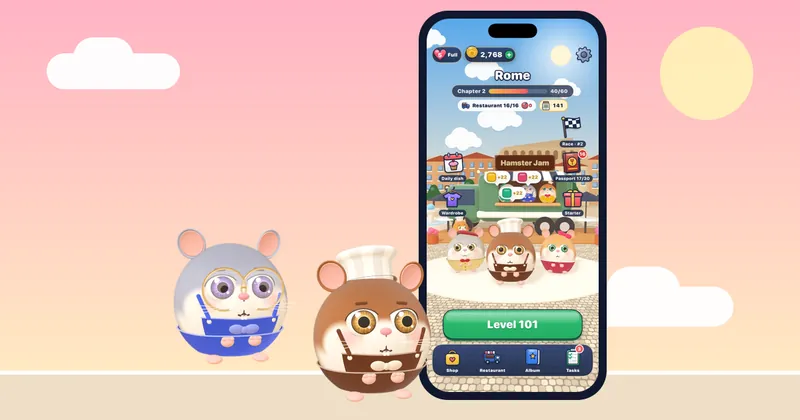
For a reset that starts fast and ends cleanly, Hamster Jam: Food Sort Puzzle fits a Pomodoro break neatly. It's a free-to-play iPhone puzzle with a simple loop you can pick up in seconds: the hamster gang is hungry and the street is jammed, so you tap a hamster whose path is clear and it hops to its favourite dish, while you keep the waiting bench from filling up.
Why it works for a focus break:
- One tap to play. No setup, no learning curve to eat your break.
- A level is short and self-contained. Clear one board, and you've got a natural, satisfying stopping point.
- No timers on your fun. It relaxes your mind instead of adding more pressure.
- Every level is solvable. Hundreds of hand-checked levels mean you won't get stuck and overrun your break, with a free shuffle to help if needed.
- Works offline. No need for signal, so it's reliable in any office or café corner.
You can play a free mini level in your browser to try a break-sized round right now, no download required.
A simple focus-break routine
Here's a five-minute reset to run between work sprints. It mixes a little movement with a little play, so both body and mind recharge.
- Minute 1: stand and stretch. Get up, roll your shoulders, look away from the screen into the distance.
- Minutes 2–4: one calm level. Play a single short puzzle board. Let your mind drop the work entirely.
- Minute 5: sip and reset. Drink some water, take a breath, and glance at what you'll tackle next.
The key is the stopping point. When the level ends, you end. That's what keeps a focus break a break, rather than the start of a half-hour detour. Our guide to low-key games for short work breaks has more ideas tuned to the workday.
Make the habit work for you
A few small rules keep focus-break gaming helpful rather than distracting.
- One level per break. Decide the limit before you start, and the game's natural finish makes it easy to honor.
- Keep the game off your main work screen. Open it on your phone, not in a browser tab beside your work, so it feels like a true step away.
- Match the break to the sprint. After a long, intense sprint, a slow puzzle; after a short one, maybe just a stretch.
- Notice the payoff. If you come back sharper after a short game than after a scroll, let that guide you.
A focus break should leave you refreshed and on time for the next round. A single calm level, where you tidy a hungry hamster jam and then put the phone down, does both. Pick something short, finishable and gentle, and let your breaks actually earn their keep.
Questions
What are the best games for focus breaks?
Choose short, self-contained games with a clear finish and no pressure: cozy sorting puzzles, quick matching games, single-screen logic puzzles and word puzzles all fit a five-minute window. Hamster Jam is a one-tap iPhone puzzle where clearing a level gives a natural stopping point so you return to work on time.
How long should a focus break be?
Many people use a Pomodoro-style rhythm of around 25 minutes of work and a 5-minute break. The exact numbers matter less than taking a real pause that pulls your mind off the work and has a clear end, so you come back refreshed rather than drifting into a long detour.
Won't a game distract me from work?
It can if the game has no natural stopping point. That's why short, level-based puzzles work better than endless feeds: when the level ends, your break ends. Set a one-level-per-break rule and keep the game on your phone rather than beside your work.
Can a quick game actually help me focus?
Many people find that a true mental break, fully off the task, helps their attention recover before the next sprint. A short, calming puzzle offers that clean reset and a small sense of completion, which can feel more refreshing than passively scrolling.