Casual vs Hardcore Games: Which Style Actually Suits You?
In this article
The difference between casual vs hardcore games comes down to how much time, focus and commitment a game asks of you. Casual games are easy to pick up, forgiving and built for short bursts; hardcore games reward deep skill, long sessions and a willingness to fail and try again. Neither is better, they simply suit different people and different moments. Here's how to tell them apart and choose the right one for you.
What "casual" and "hardcore" really mean
These two words get thrown around a lot, often as if "hardcore" means serious and "casual" means lazy. That's not quite it. The labels describe the shape of the experience, not the worth of the player.
Casual games in a nutshell
Casual games are designed to welcome everyone. They tend to share a few traits:
- A gentle learning curve. You understand the goal within seconds and don't need a long tutorial.
- Short sessions. A single round or level fits into a coffee break, a bus ride or the minutes before bed.
- Forgiving design. Mistakes rarely cost you much, and you can usually stop any time without losing progress.
- Low pressure. Often no timers, no steep penalties, and nothing that punishes you for stepping away.
Hardcore games in a nutshell
Hardcore games are built for depth and mastery. They usually feature:
- A steeper learning curve with systems that take real time to understand.
- Long, focused sessions where you settle in rather than dip in and out.
- High challenge that expects you to fail, learn and improve.
- Commitment, whether that's reaction speed, strategy, memorising mechanics or grinding progress.
Think of it as the difference between a relaxing stroll and training for a marathon. Both involve walking; only one asks you to organise your whole week around it.
The honest trade-offs
Each style gives something and asks for something in return.
Casual games give you flexibility, instant fun and a low barrier to entry. They're perfect when your brain is already tired. The trade-off is that they may feel shallow if you crave a deep, brag-worthy challenge.
Hardcore games give you a powerful sense of achievement and rich, lasting worlds to master. The trade-off is time and energy. If you only have ten spare minutes and a frazzled mind, a demanding game can feel like one more chore rather than a reward.
A lot of players enjoy both, reaching for a hardcore game on a free weekend and a casual one on a busy weeknight.
Which style suits you right now?
Instead of picking a permanent camp, match the game to your situation. Ask yourself:
- How much time do I have? Minutes point to casual; a long free evening can support hardcore.
- How much mental energy is left? Drained means casual. Sharp and curious can handle hardcore.
- What do I want to feel? Calm and unwound leans casual. Challenged and accomplished leans hardcore.
- Can I be interrupted? If a child, a kettle or a meeting might pull you away, casual is kinder.
There's no wrong answer, and it can change hour to hour. The point is to choose on purpose instead of defaulting to whatever is loudest on the store page. If you want a wider map of styles to choose from, our friendly guide to the different types of mobile puzzle games breaks the options down by feel.
Where cozy puzzles fit
Most cozy puzzle games sit firmly on the casual end, and that's exactly their charm. They offer just enough thinking to feel engaging without the stress of a hardcore grind. You get a clear goal, small wins and the freedom to stop whenever you like.
This makes casual puzzles a great default for adults juggling work, errands and tired evenings. If that sounds like you, our look at relaxing casual games for grown-ups gathers more of what makes this style so appealing after a long day.
A cozy casual puzzle to try
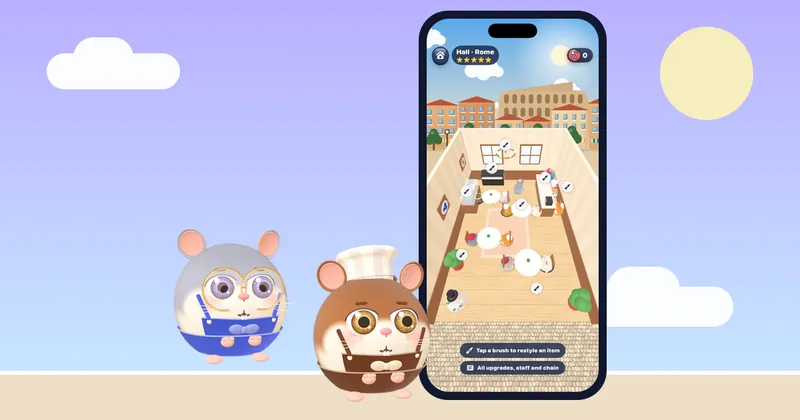
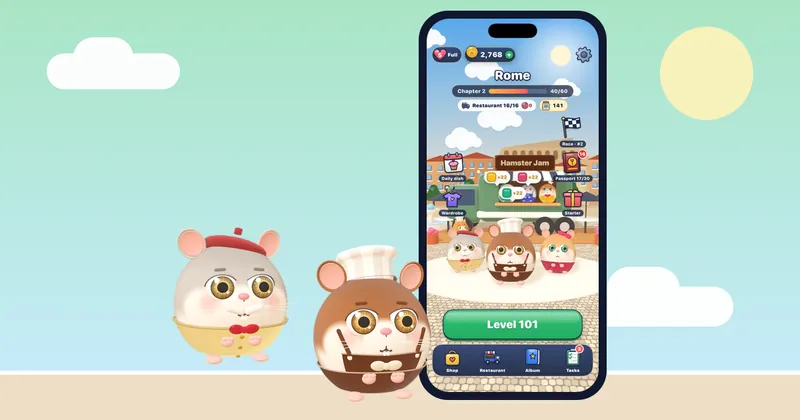
If you want to feel the casual style at its most welcoming, Hamster Jam: Food Sort Puzzle is a lovely place to start. It's free to play, works offline, and is built around a simple, soothing idea: a gang of six hungry hamsters, a jammed street, and your job to get everyone fed.
How it plays:
- The hamster gang is hungry and the street is jammed.
- You tap a hamster whose path is clear, and it hops off to its favourite dish.
- You keep an eye on the waiting bench so it doesn't fill up.
What makes it so comfortably casual:
- No timers on your fun, so you think at your own pace.
- Easy start, trickier later, with gentle twists like sleepy hamsters, ice blocks, keys and cages, lovebirds and picky VIPs.
- Every level is solvable (hundreds of hand-checked levels), so you're never stuck for good.
- Friendly helpers like a free shuffle and an extra seat on the bench when you need a hand.
- Works offline with a relaxed free play mode, so you can dip in anywhere.
You can even play a free mini level of the hamster puzzle right in your browser to see whether the casual pace is your speed.
Can a casual game still feel deep?
Yes, and this is where the labels blur in the best way. A well-made casual game offers real decisions, free the edge hamsters first, plan a move or two ahead, without punishing you for getting them wrong. That gives you a satisfying hint of strategy wrapped in a relaxed package. Many people find this "easy to learn, pleasant to think about" sweet spot more rewarding than either extreme.
If you enjoy that gentle-but-thoughtful blend, you'll likely love the wider world of calming puzzles. Our deeper dive into relaxing puzzle games and why they calm your brain explains why low-pressure thinking can feel so good.
In short
The casual vs hardcore choice isn't about which kind of player you are forever, it's about what fits your time, energy and mood right now. Casual games welcome you in for a few gentle minutes; hardcore games reward deep, committed mastery. Most of us need both at different times. When your day has been long and your focus is thin, a cozy casual puzzle is often the kinder, smarter pick, and a hungry hamster jam is a delightful way to try one.
Questions
What is the difference between casual and hardcore games?
Casual games are easy to learn, forgiving and built for short sessions, often with no timers and little penalty for stopping. Hardcore games have steeper learning curves, longer sessions and high challenge that expects you to fail and improve. The difference is about how much time, focus and commitment the game asks of you, not about which type of player is "better."
Are casual games easier than hardcore games?
Generally yes, casual games are designed to be approachable so almost anyone can enjoy them quickly. But easy to start doesn't mean shallow: a good casual puzzle still offers real decisions and a pleasant touch of strategy. It simply wraps that thinking in a low-pressure package, so you feel engaged rather than stressed.
Which type of game is better for relaxing?
Casual games are usually the better choice for relaxing, because their short sessions, forgiving design and lack of time pressure let you unwind instead of grinding. Cozy casual puzzles are especially soothing. Hardcore games can be rewarding, but their intensity and long sessions make them less suited to winding down after a tiring day.
Is Hamster Jam a casual game?
Yes. Hamster Jam is a cozy, casual food sort puzzle: it's free to play, works offline, has no timers, and every level is solvable thanks to hundreds of hand-checked puzzles. You tap hamsters to send each one to its favourite dish while keeping the waiting bench clear. It's easy to pick up for a few minutes, with gentle twists later that add just enough thinking to stay interesting.